SLA or SLS? Choose the Right 3D Tech Before Costly Reprints
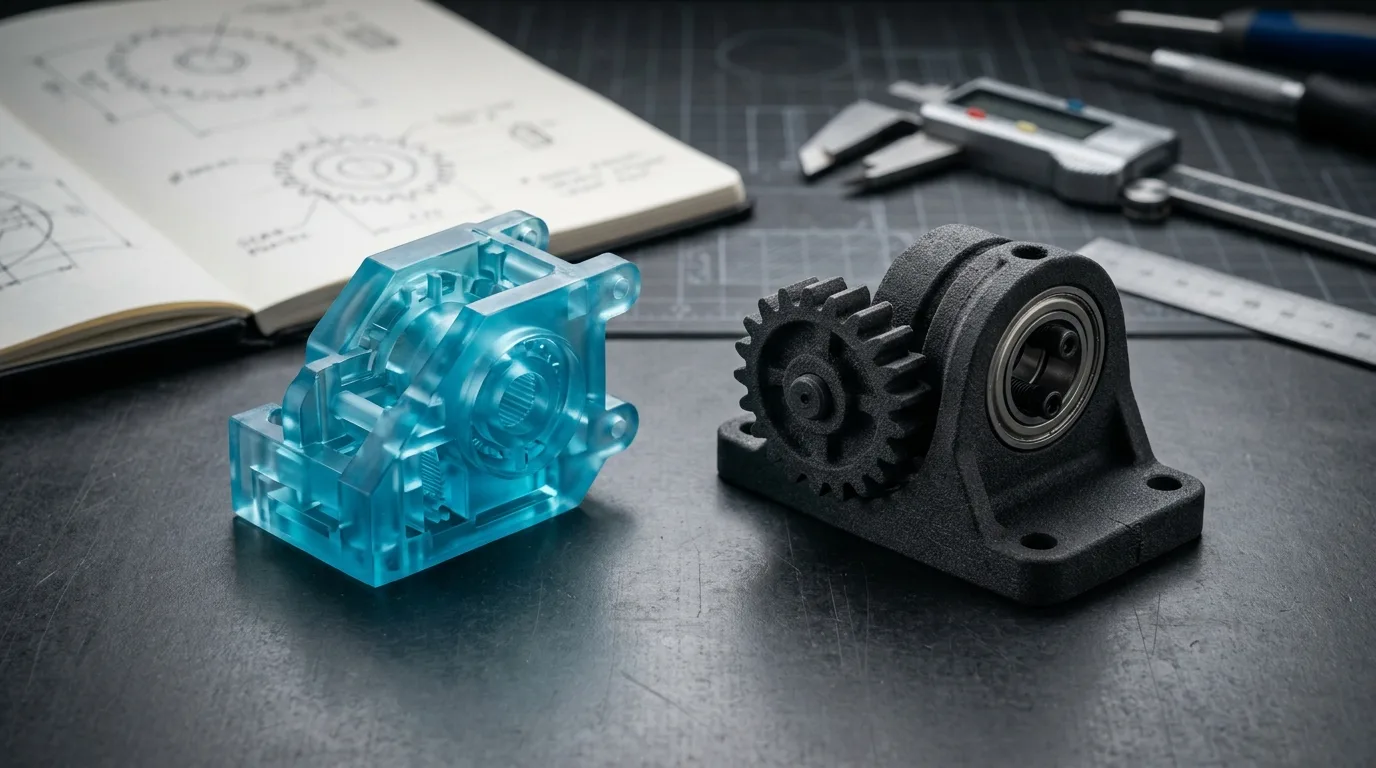
When your 3D CAD model is ready to print, selecting the right manufacturing technology is the crucial first step. The two most prominent choices for product development and engineering are SLA (Stereolithography) and SLS (Selective Laser Sintering). While both build parts layer by layer, the resulting surface quality, structural strength, and total cost vary significantly. Making the right decision up front saves both redesign time and expensive reprint cycles.

Comparison between an SLA photopolymer resin prototype with fine surface detail and an SLS nylon functional part built for mechanical endurance.
Wrong Technology Choice = Wasted Time and Unnecessary Costs
Print failures and unsuitable parts often stem from matching the wrong process with your functional requirements:
Printing load-bearing parts with standard SLA: General resins tend to be brittle and may shear along layer lines under mechanical deflection or impact.
Printing micro-details with SLS: The grainy, powder-based surface finish may obscure miniature text or razor-sharp edge contours.
Support structure overhead: SLA requires support struts that require careful manual removal and surface finishing, whereas SLS is entirely self-supporting.
Both Build in Layers, but Materials and Formation Differ Entirely
SLA (Stereolithography): High Resolution and Glass-Smooth Surfaces
SLA utilizes an ultraviolet laser or projector to cure liquid photopolymer resin layer by layer at thicknesses from 25 to 100 microns. It is optimal for presentation models and visual validation requiring sharp corners and tight dimensional tolerances. Parts require structural support scaffolding, solvent washing, and secondary UV curing.
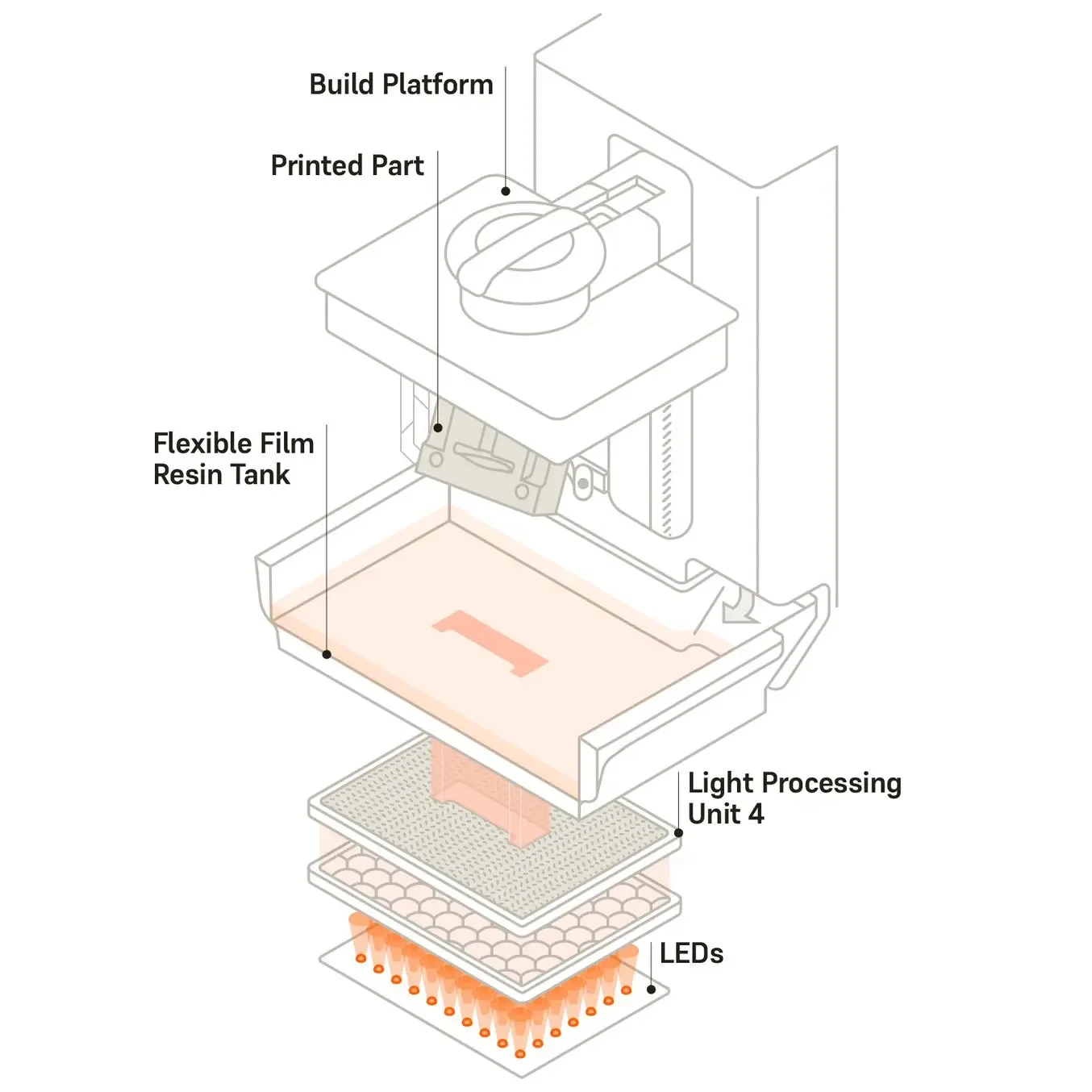
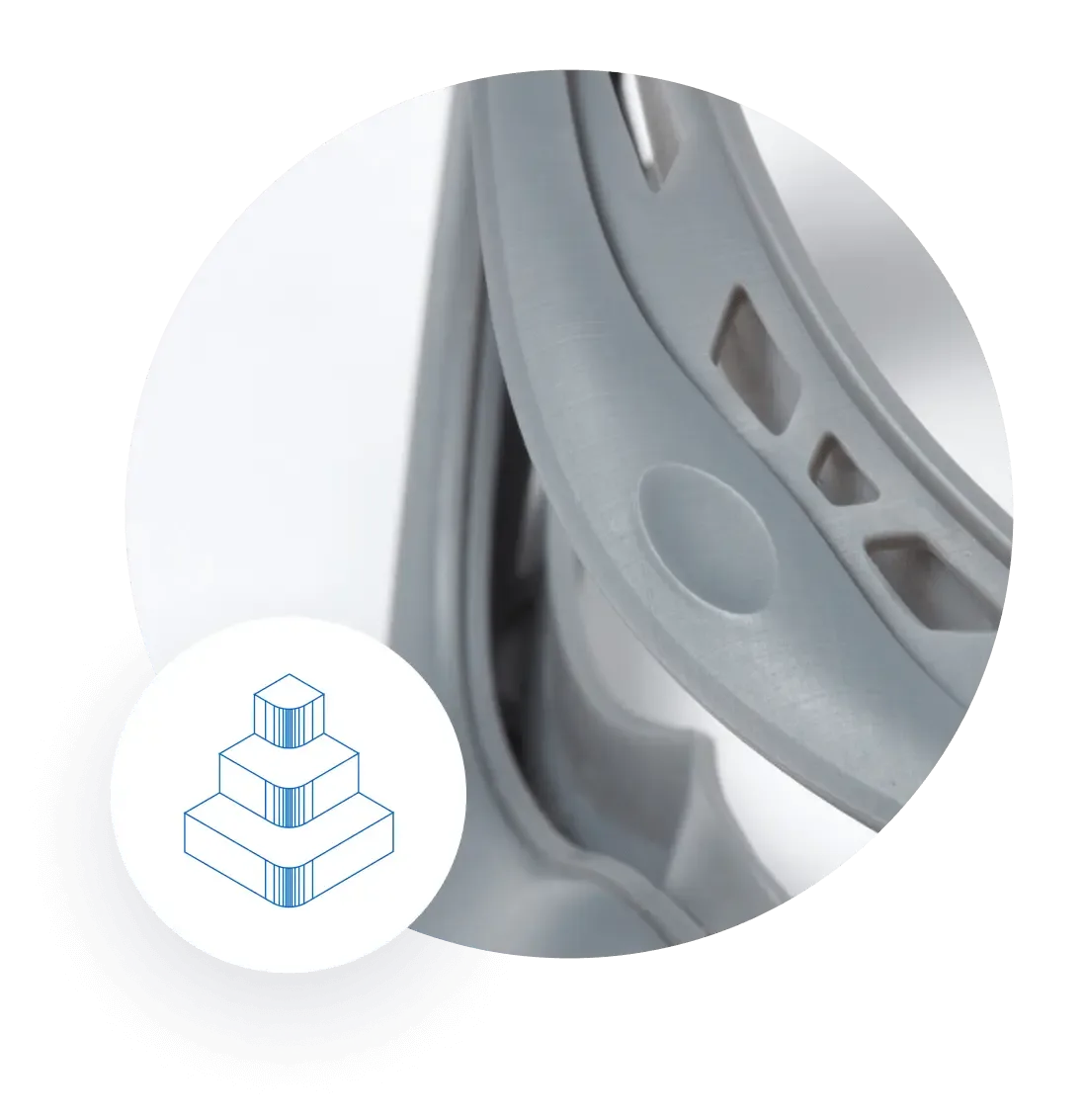
Left: SLA 3D printing curing mechanism. Right: Exceptionally smooth surface finish with imperceptible layer transitions.
SLS (Selective Laser Sintering): Robust, Durable, and Support-Free
SLS sinters powdered engineering thermoplastics (typically Nylon PA12) using a high-power laser. Unsintered powder supports the part during printing, enabling complex geometries, deep internal channels, and pre-assembled mechanical linkages without auxiliary supports. Finished parts exhibit near-isotropic mechanical strength.
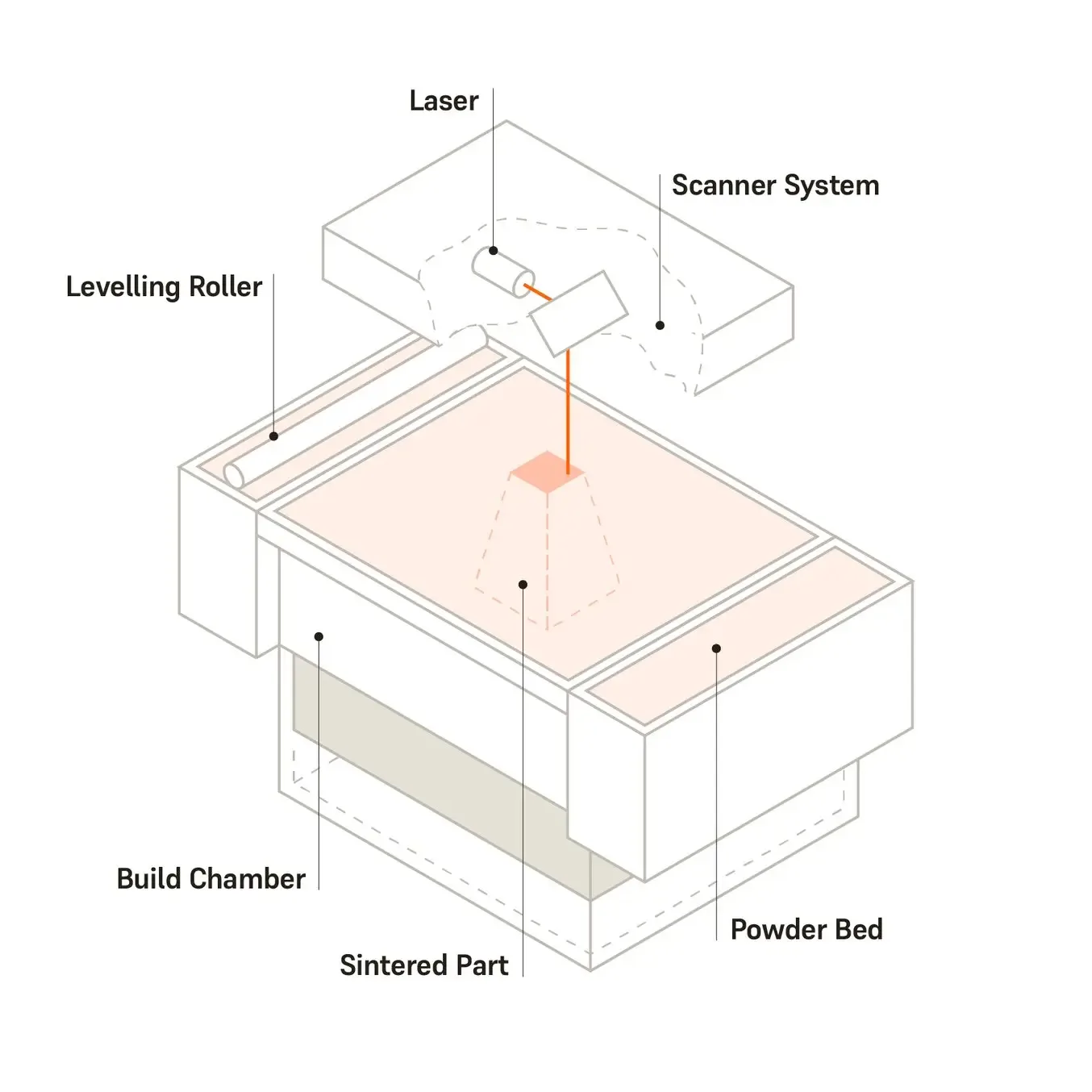
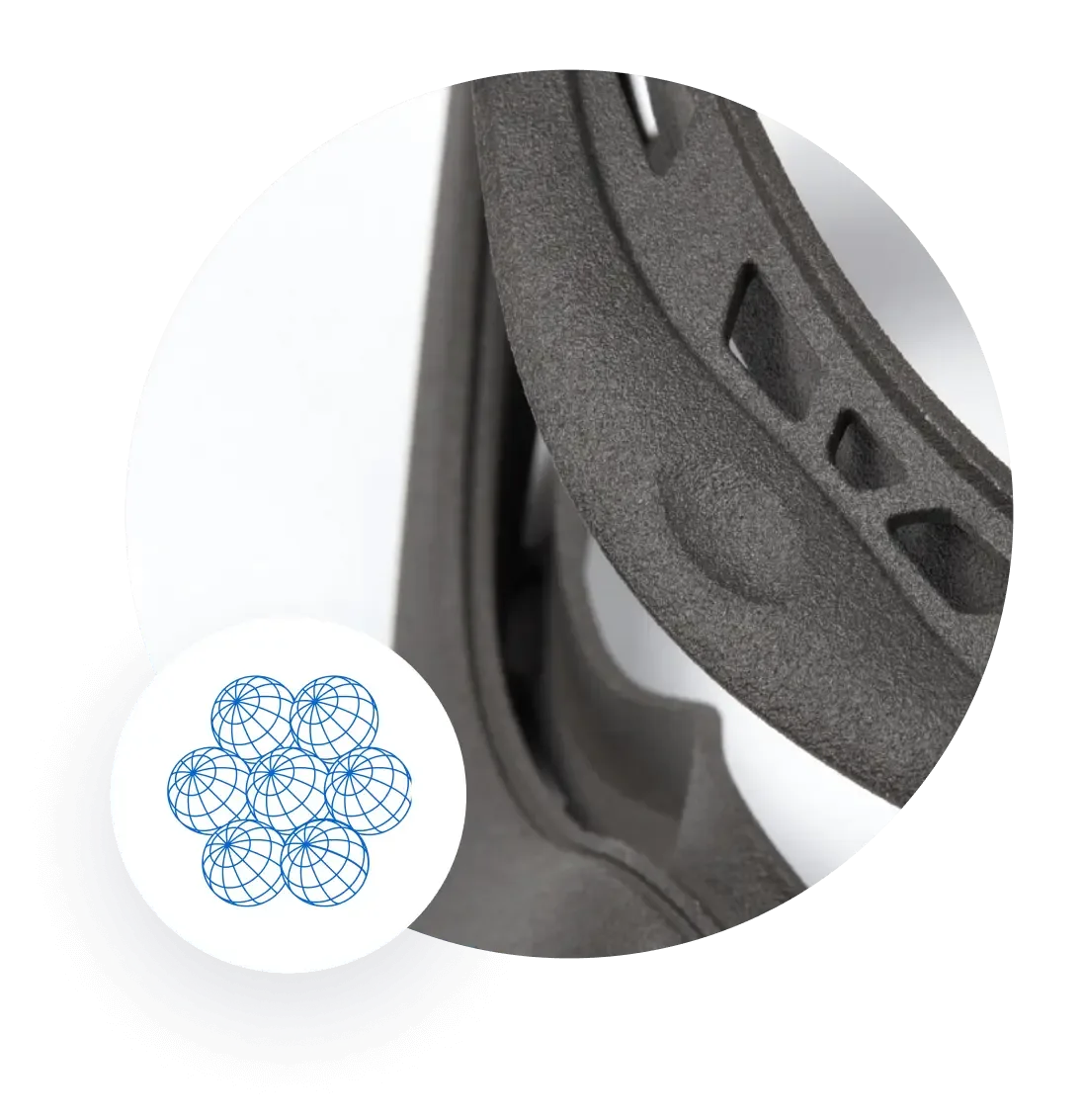
Left: SLS laser sintering mechanics. Right: Matte, granular nylon surface offering high resistance to wear and impact.
Comparison Table: SLA vs SLS
Parameter | SLA (Photopolymer Resin) | SLS (Nylon PA12) |
|---|---|---|
Surface & Detail | Ultra-smooth, crisp edges, ideal for delicate micro-features | Matte granular texture, slight limitation on micro-details |
Mechanical Durability | Rigid but brittle; sensitive to shock and prolonged UV exposure | High toughness, impact-resistant, isotropic strength |
Support Structures | Required; leaves post-processing contact marks | None needed (supported by surrounding powder cake) |
Complex Geometries | Supported, but requires liquid drain escape holes | Unlimited freedom, ideal for moving assemblies and hollow ducts |
Typical Applications | Visual prototypes, master patterns, dental, jewelry | End-use production parts, manufacturing jigs, snap-fits |
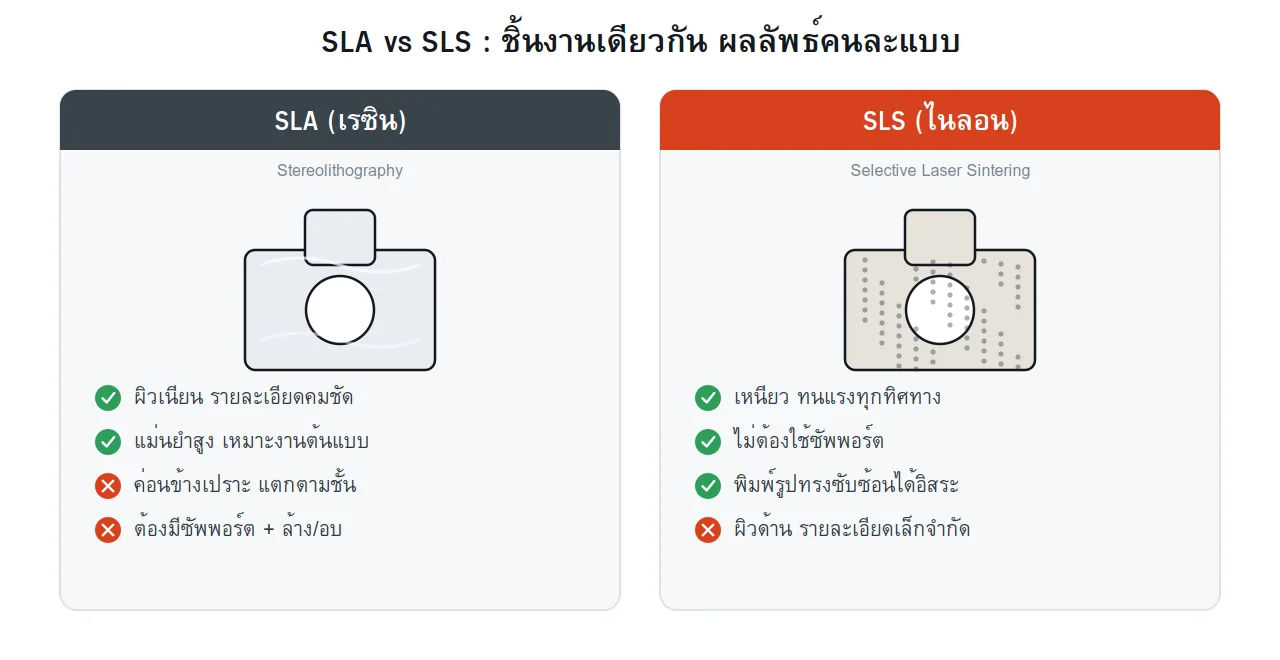
Summary of pros and cons across SLA and SLS printing processes.
Real-World Industrial Use Cases
Dental and Jewelry Master Casts: SLA is preferred for its micron-level accuracy and pristine surface that ensures clean investment casting.
Consumer Product Form & Fit Models: SLA delivers realistic aesthetic fidelity matching final injection-molded production parts.
Assembly Jigs, Fixtures & Robotic End-Effectors: SLS nylon withstands mechanical friction, repetitive impacts, and chemical exposure on active factory floors.
“Once we recognized our fixture had to endure real operational stress rather than just look good, switching to SLS solved our breakage issues permanently.”
— Production engineer case testimonial
Instant Quotes and Technical Advice
With on-demand industrial 3D printing powered by AppliCAD, 3DQuickpart helps you pinpoint the right material and technology for your specification. Upload your 3D files for immediate pricing and automated design checks at 3DQuickpart Instant Quote, or get in touch with our engineering team at 095-365-6871.