3D Printing for Production Lines: How to Cut Costs and Time
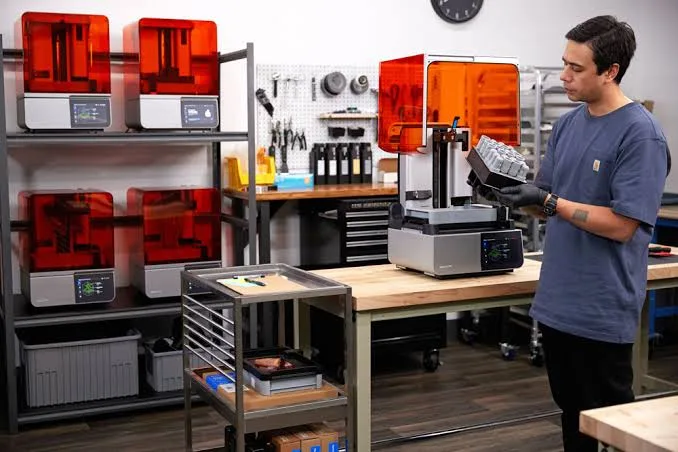
3D printing significantly cuts production costs and lead times, particularly for low-volume production where creating injection molds is economically impractical. By eliminating upfront tooling expenses, skipping weeks of lead time, and allowing immediate engineering adjustments, additive manufacturing is transforming modern production lines.
3D Printing Is No Longer Just for Prototyping
Many still view 3D printing strictly as a rapid prototyping tool. In reality, industrial 3D printing has become an integral component of actual factory production lines, especially for low-to-mid volume manufacturing where tooling investments cannot be justified. Understanding how additive manufacturing reduces costs, shortens lead times, and where the economic breakeven lies is vital knowledge for today's engineering and operations leaders.
Molds: High Capital Costs and Long Lead Times for Low Volumes
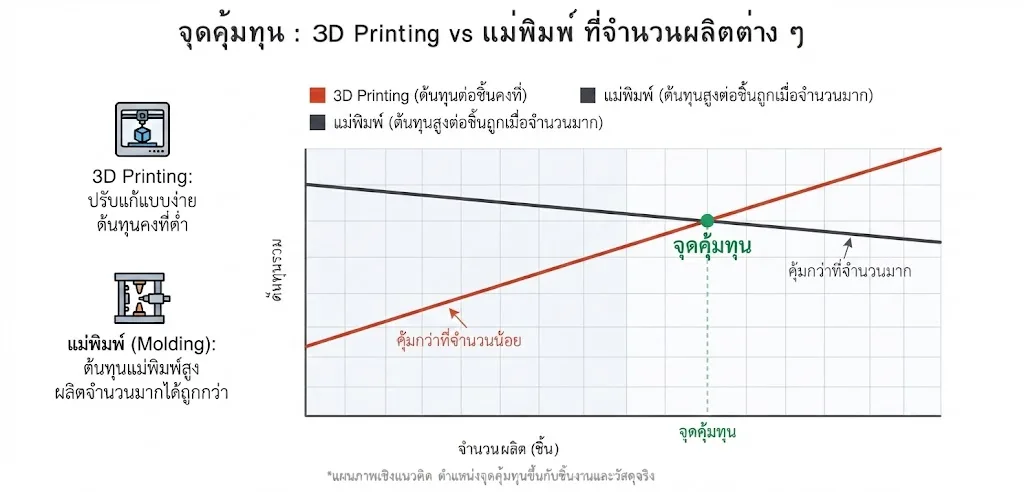
Conventional injection molding presents significant challenges when production quantities are limited:
High Upfront Investment: Tooling costs range from tens of thousands to millions of baht, only paying off at mass production volumes.
Lengthy Lead Times: Mold fabrication and testing take 4 to 8 weeks, severely delaying product launches and time-to-market.
Difficult and Costly Revisions: Once a mold is cut, modifying part geometry requires expensive rework or rebuilding the mold entirely.
Inventory Holding Risk: Manufacturers must produce large batches to achieve acceptable unit costs, tying up capital in excess inventory.
Manufacturing Shift: From High Volume to Speed and Agility
Historically, factory competitiveness relied on high-volume output and economies of scale. Today, speed-to-market and design agility provide the winning competitive edge. With shorter product life cycles and rising demand for customized batches, agile low-volume production via 3D printing directly meets modern industrial requirements.
Why 3D Printing Is Economical at Low Volumes
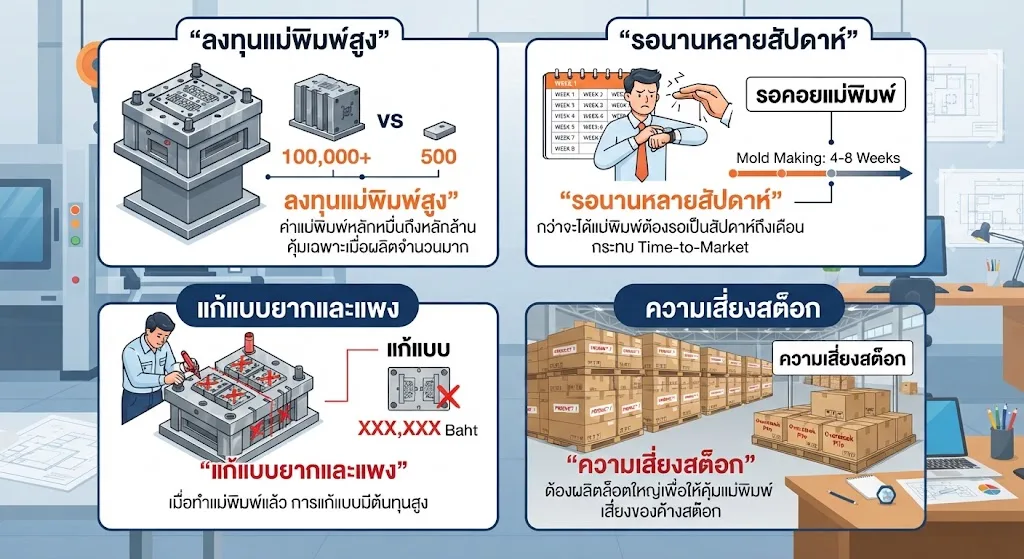
Mold manufacturing requires substantial fixed capital upfront, after which marginal unit costs decrease over large production volumes. Conversely, 3D printing involves virtually zero fixed tooling costs—parts are produced directly from CAD models. While the per-unit cost remains relatively flat, the total expenditure for small batches is dramatically lower than tooling up for injection molding.
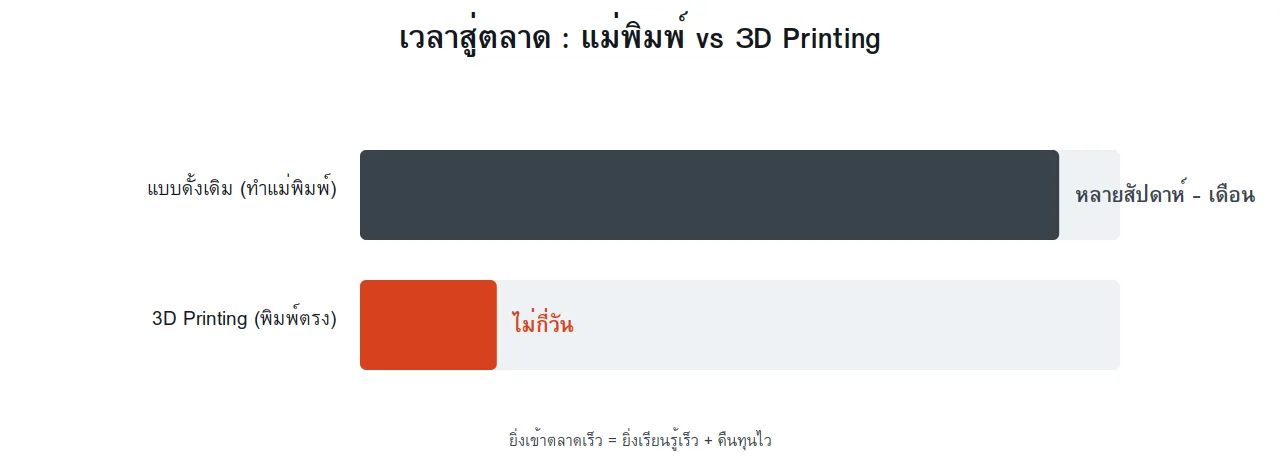
Time-to-market comparison: Traditional Tooling vs. 3D Printing
Production Benefits and How to Calculate ROI
A direct comparison reveals the operational and commercial advantages of additive manufacturing:
Comparison Factor | Traditional Molding (Low Volume) | 3D Printing |
|---|---|---|
Initial Investment | High (tooling & mold costs) | Virtually zero |
Time to Market | Several weeks to months | Just a few days |
Design Revisions | Expensive retooling or new molds | Update the CAD file and reprint immediately |
Inventory Risk | High; requires large production lots | Produce on-demand to match real need |
Simple ROI Calculation:
Compare the total costs of both methods at your required production volume:
Option A (Molding): Tooling Cost + (Unit Production Cost × Quantity)
Option B (3D Printing): Unit Print Cost × Quantity
If your required quantity falls below the breakeven threshold, 3D printing is unequivocally more cost-effective—not to mention the intangible gains of beating competitors to market and eliminating warehouse inventory carrying costs.
Ideal Production Line Applications for 3D Printing
Here are typical manufacturing applications where 3D printing delivers immediate value:
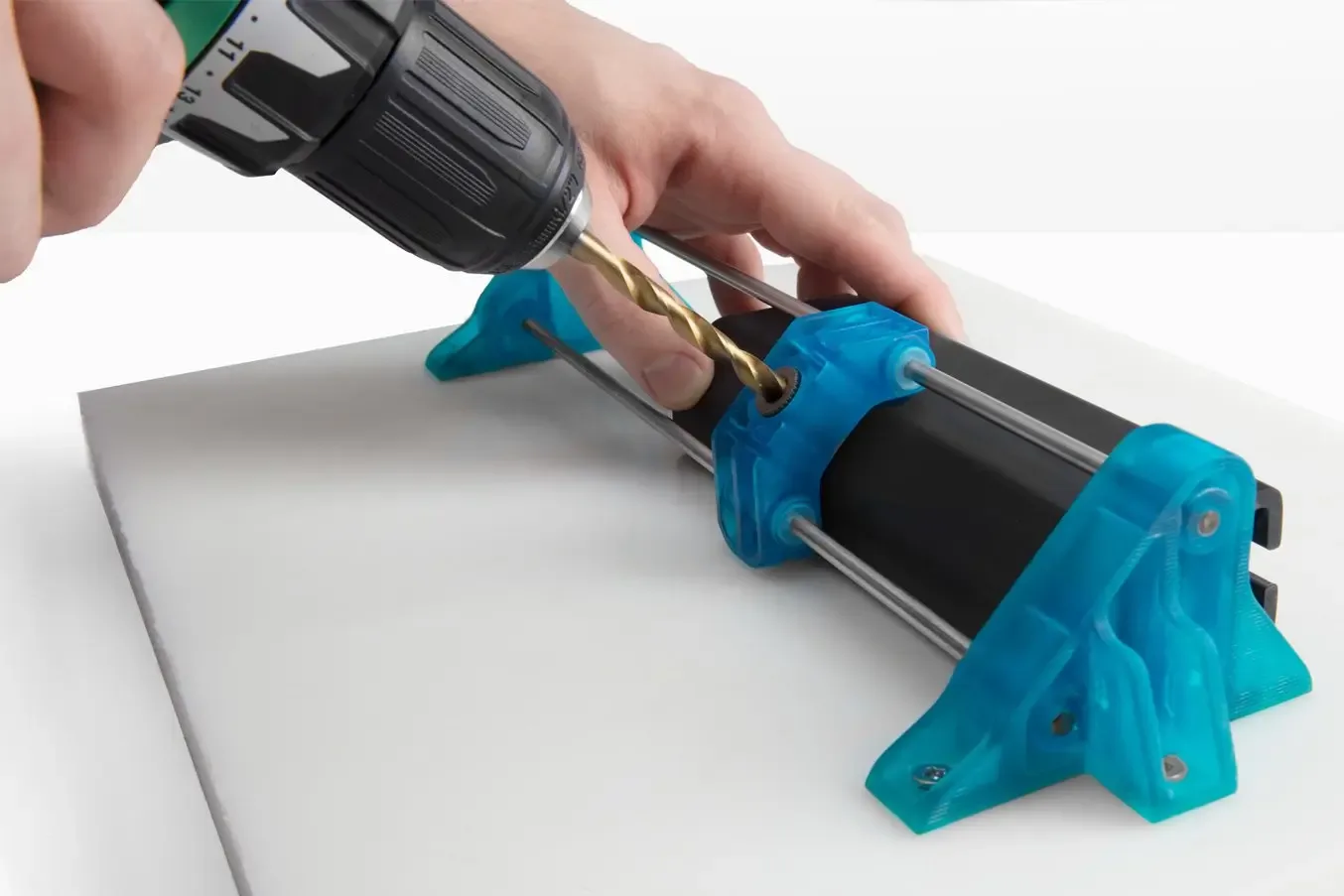
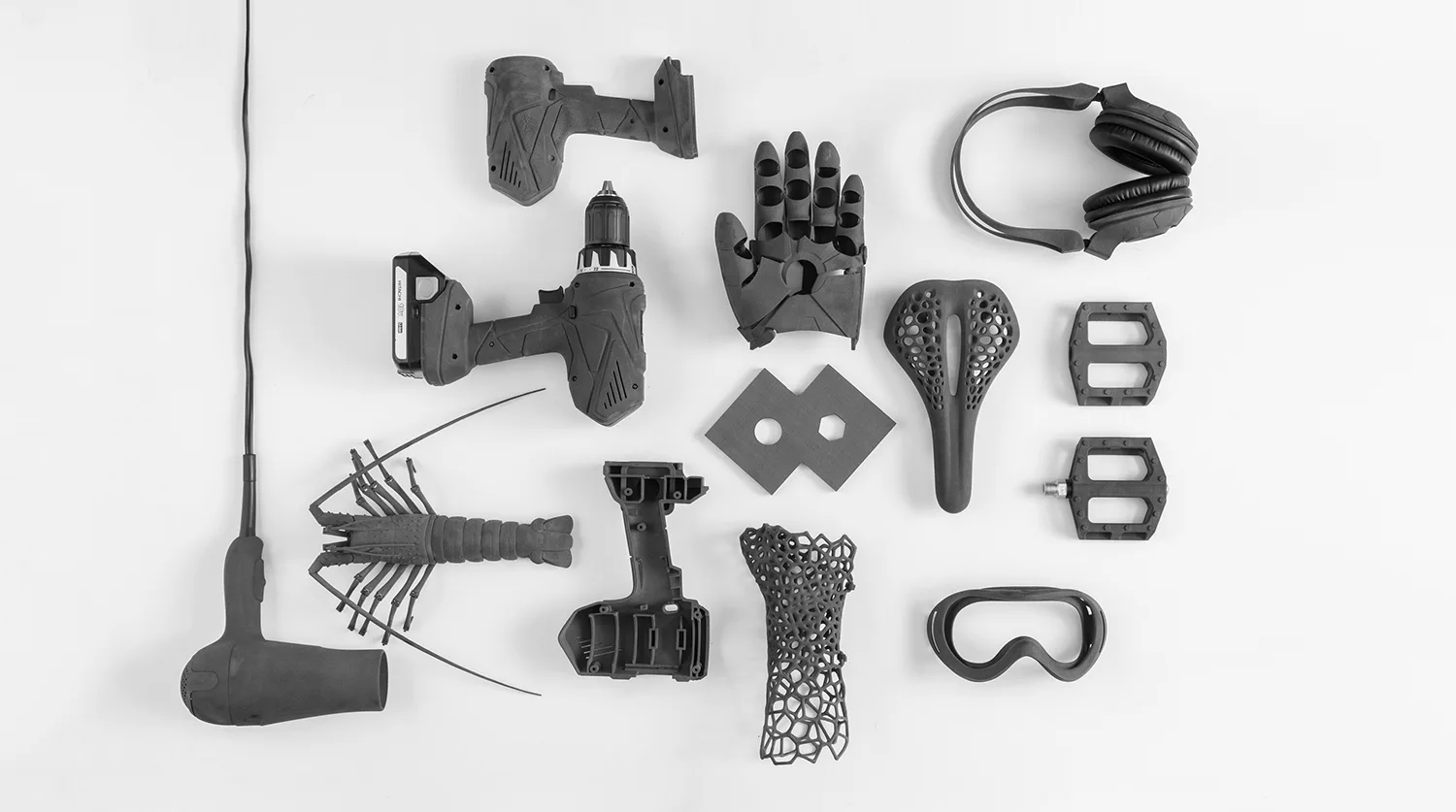

Jigs & Fixtures: Custom assembly aids, holding nests, and drill guides needed in quantities of 1 to 10 units. 3D printing delivers them in 24–48 hours at a fraction of CNC machining costs.
Obsolete Replacement Spare Parts: Hard-to-source machine components can be reverse-engineered and printed on-demand, minimizing unplanned line downtime.
Special Editions and Custom Runs: Niche consumer goods, limited runs, and bespoke industrial components that do not justify dedicated injection molds.
“We print assembly fixtures in-house instead of outsourcing CNC work. It saves both time and budget, while letting us iterate immediately whenever the line reconfigures.”
— Production Engineering Team Feedback
Evaluate Your Project Economics with 3DQuickPart
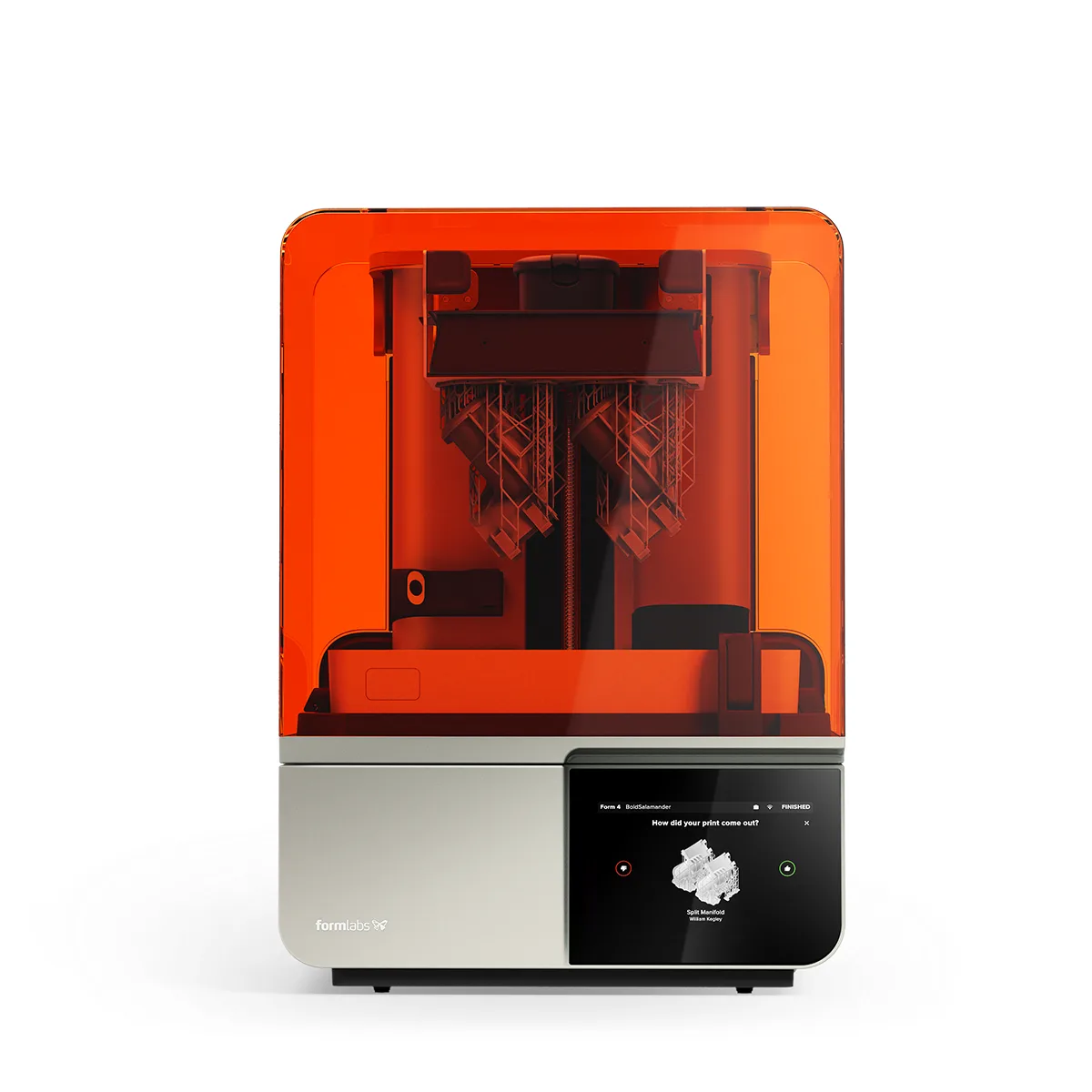
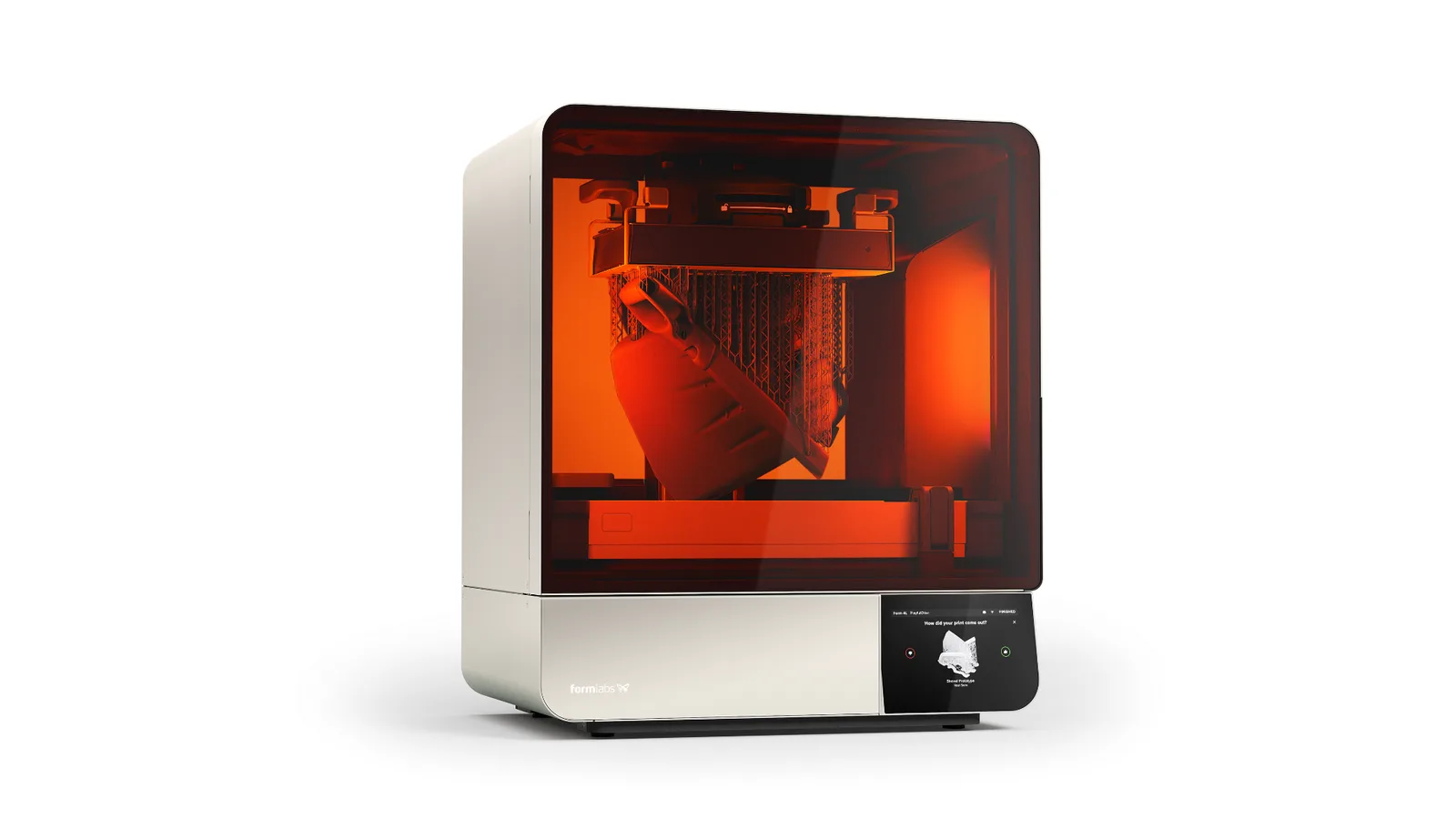
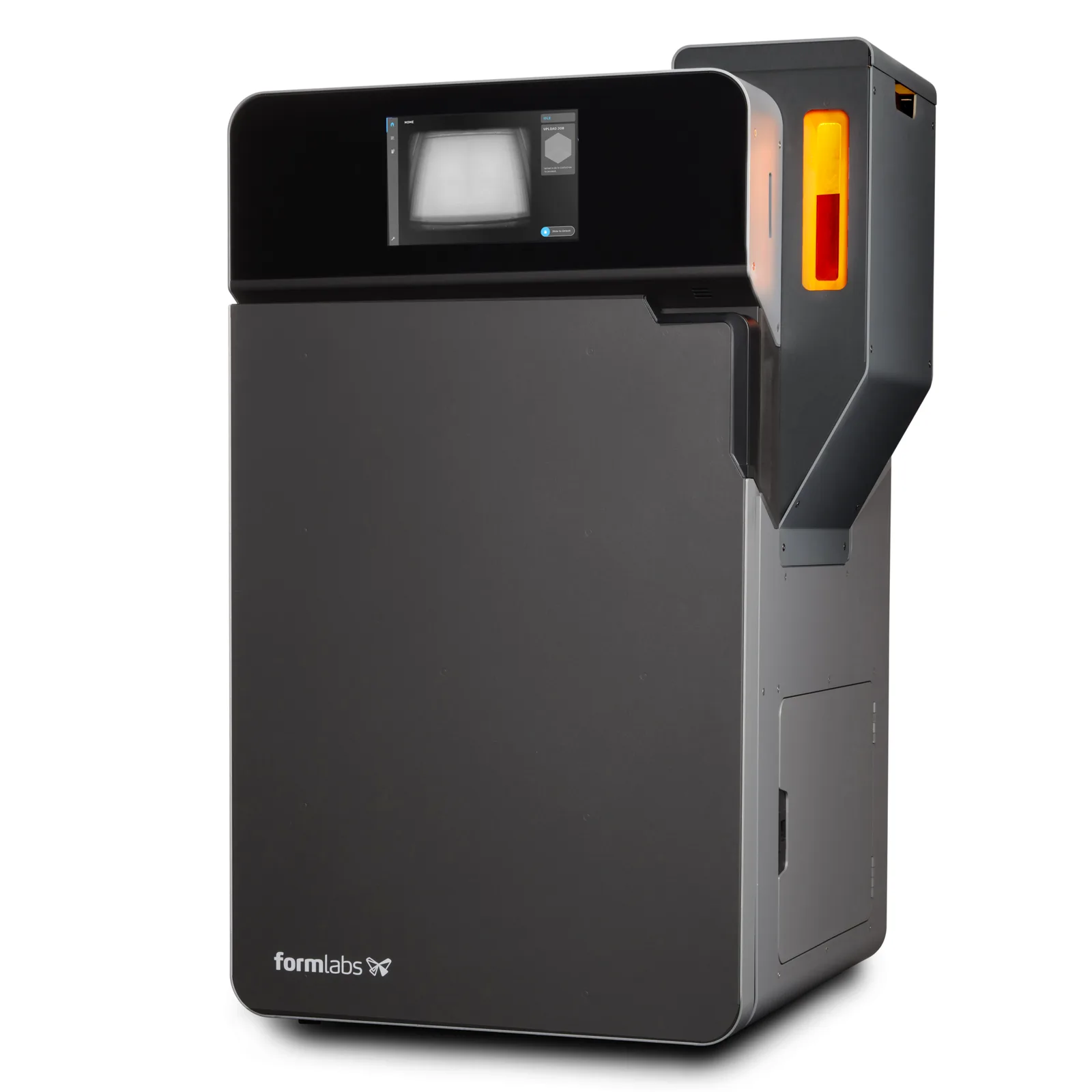
With 3DQuickPart by AppliCAD, you can evaluate your project's breakeven point and unit costs instantaneously. Simply upload your CAD file (STL / STEP) to receive real-time quotes for industrial SLA resin on the Formlabs Form 4L and functional SLS nylon PA12 on the Formlabs Fuse 1+. Validate production decisions with tangible figures without investing in machinery upfront.
For specialized engineering consultation and breakeven assessments, contact our AppliCAD team at 095-365-6871 or our head office at 0 2744 9045, or visit the AppliCAD Innovation Center (AIC).
Match the Tool to Your Volume and Timeline
3D printing is not meant to replace injection molding entirely. However, it is undeniably the superior choice for low-volume runs, fast market validation, and designs requiring continuous refinement. By understanding your breakeven point and calculating ROI based on real figures, you can deploy the right manufacturing tool for maximum speed and profitability.