Choosing the Right 3D Printing Material for Your Application
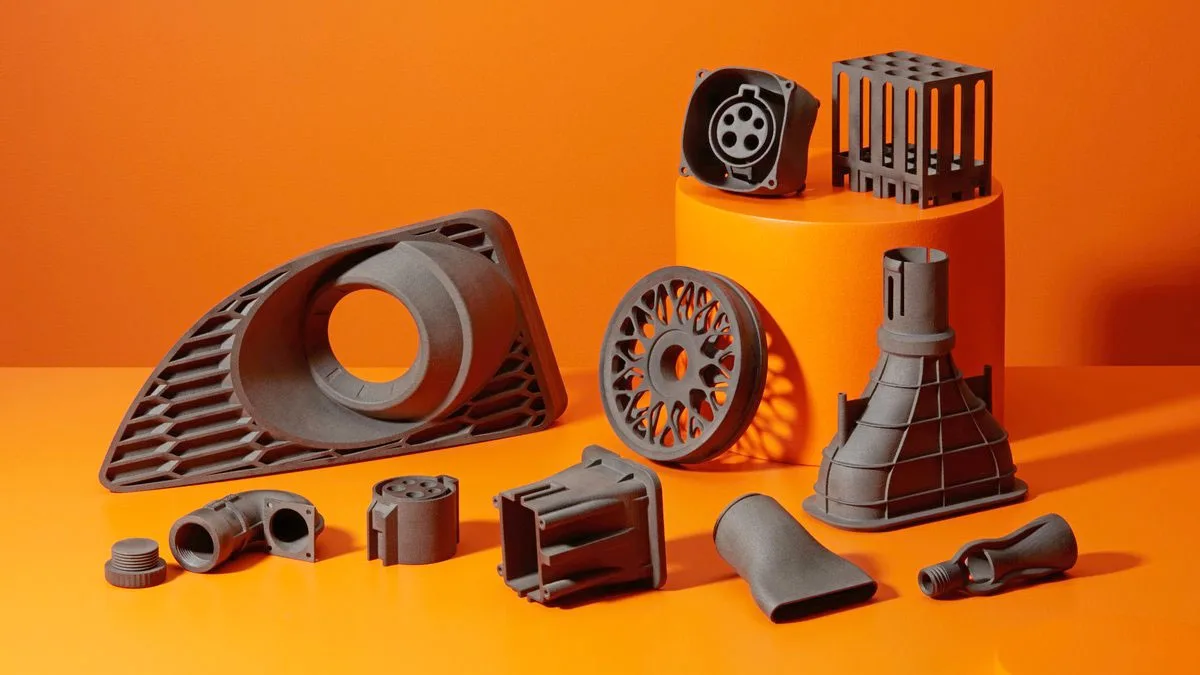
Printing technology is only half the equation in additive manufacturing; the material you choose accounts for the rest. The exact same 3D CAD model printed in different materials will exhibit vastly different mechanical strength, flexibility, thermal deflection, and surface texture. Matching the material properties directly to your part's operational environment is the essential first step to ensuring success.
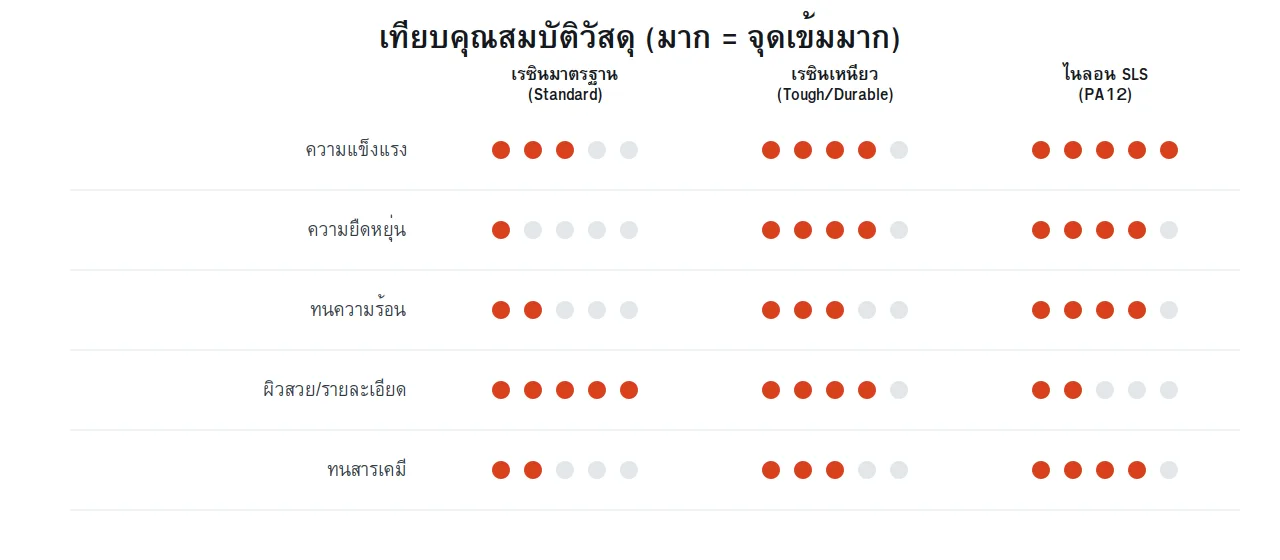
Comparative matrix of major 3D printing material categories across strength, flexibility, heat resistance, surface finish, and chemical resistance.
Common Pitfalls of Incorrect Material Selection
When 3D printed components fail during real-world evaluation, the cause is rarely the 3D printer itself—it is usually an improper material match for the physical loads or operating conditions:
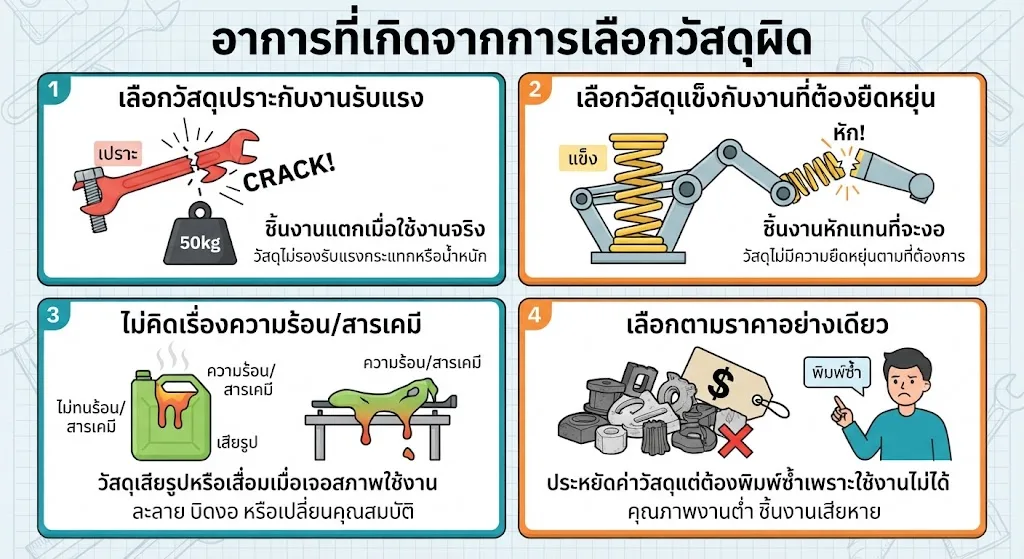
Specifying brittle materials under dynamic loads: Using standard general-purpose resins for load-bearing brackets or press tools causes immediate fracture upon shock or repeated loading.
Choosing rigid resins where compliance is required: Snap-fit clips, latching arms, or living hinges crack on first assembly because the material lacks adequate elongation.
Ignoring heat and chemical exposure: Parts soften, deform, or swell when exposed to operating lubricants, elevated ambient heat, or outdoor UV radiation.
Selecting purely based on initial unit price: Opting for the cheapest material often leads to repeat print orders and project delays when parts fail on the bench.
The Rise of Production-Grade Engineering Materials
3D printing has matured far beyond cosmetic mockups. Modern engineering photopolymers and thermoplastic powders can withstand high impact, sustain continuous temperatures up to 200°C, and offer electro-static dissipative (ESD) protection. These advancements allow design engineers and manufacturing teams to deploy 3D printed components directly as functional tooling and end-use production parts.
Understanding the Four Primary Material Families
1. Standard Resins (SLA)
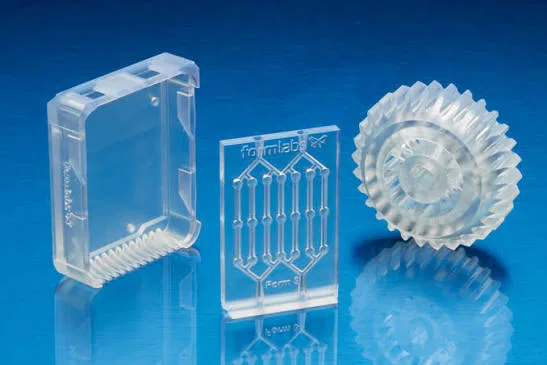
Formulated for stereolithography 3D printers such as the Formlabs Form 4L, standard photopolymer resins deliver micron-level dimensional accuracy, sharp edge definition, and a smooth surface with virtually invisible layer lines. They represent the gold standard for visual prototypes, aesthetic mockups, and customer presentation models, though their relatively brittle nature makes them unsuited for mechanical impact.
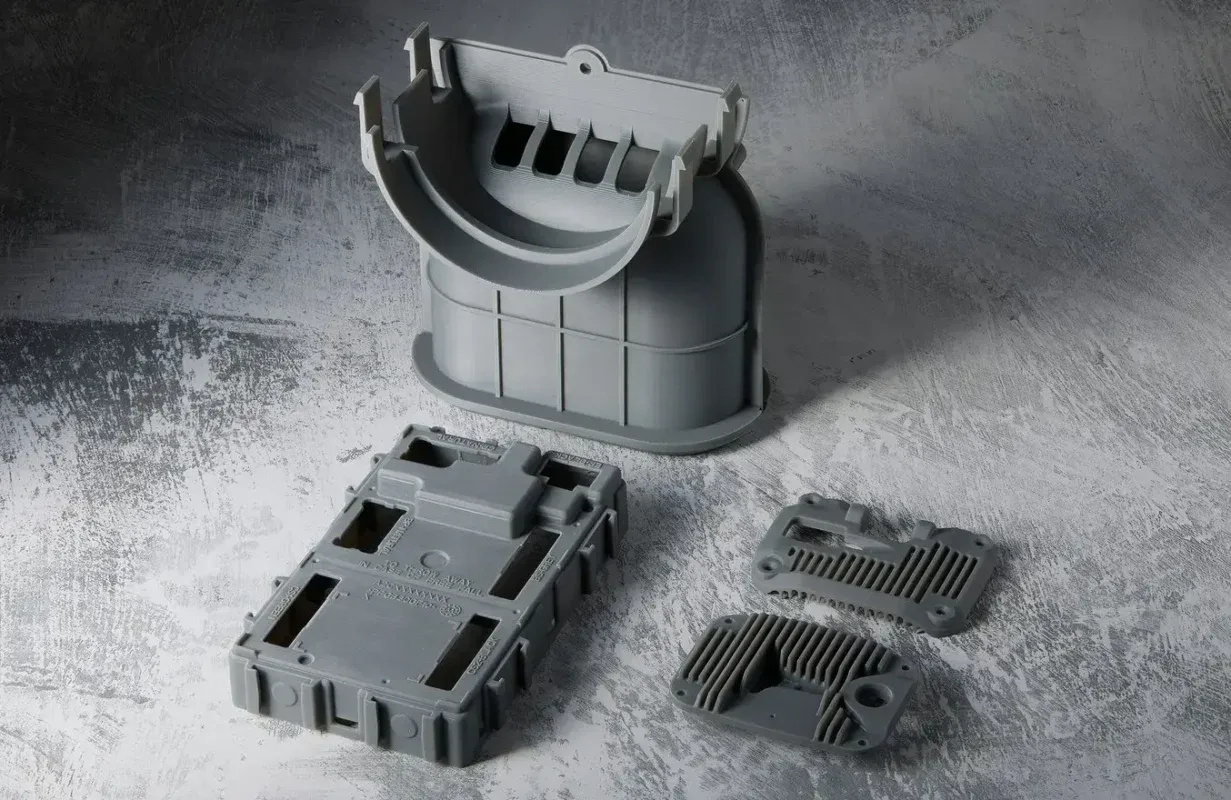
2. Tough & Durable Resins (SLA)
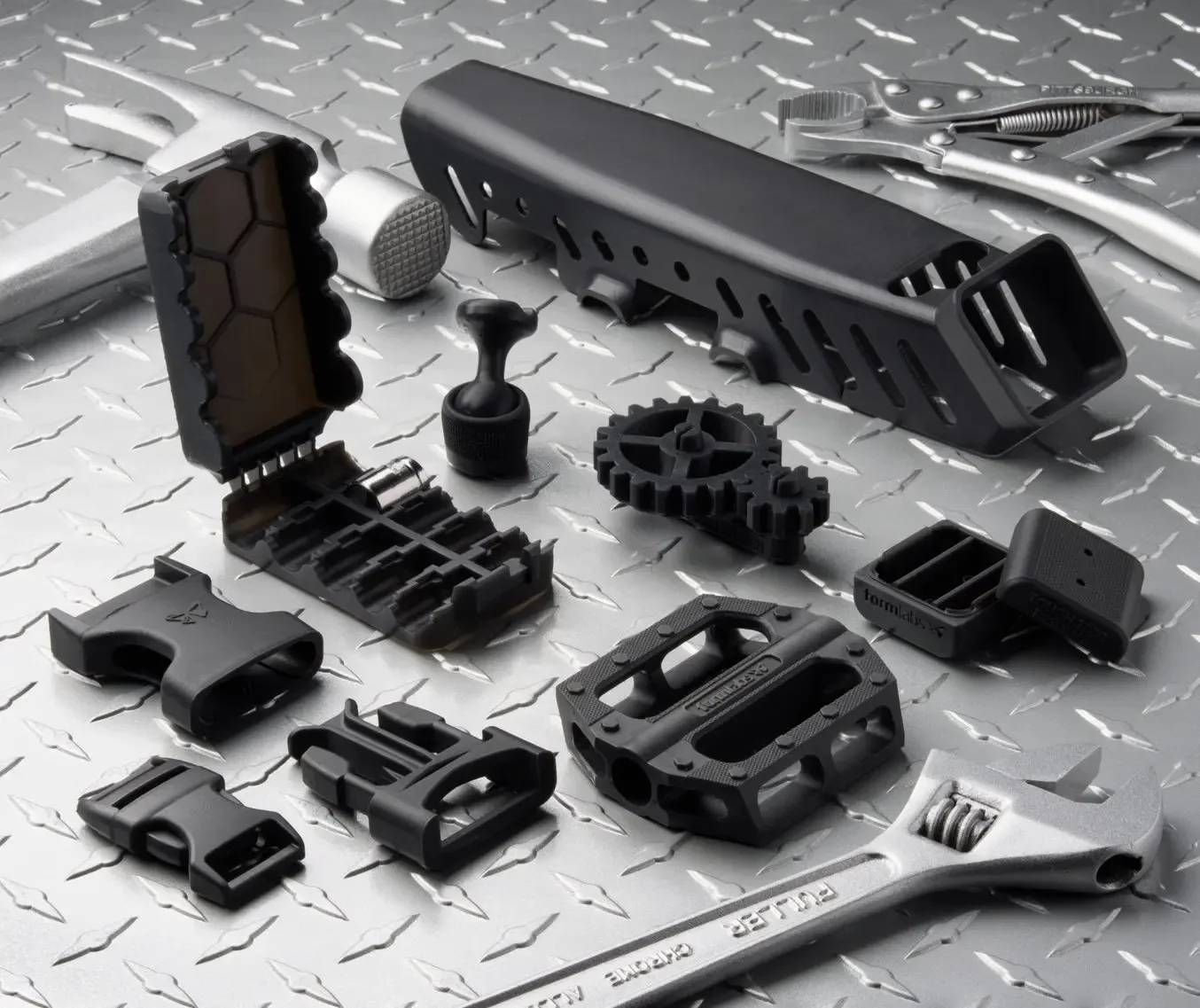
Engineered to simulate the physical properties of injection-molded thermoplastics such as ABS and Polypropylene (PP), tough and durable photopolymers feature high elongation at break and superior impact absorption. They excel in functional assemblies, cyclic snap-fits, consumer electronics enclosures, and moving linkages that need to yield without fracturing.
3. Industrial Nylon Powders (Nylon PA12 - SLS)
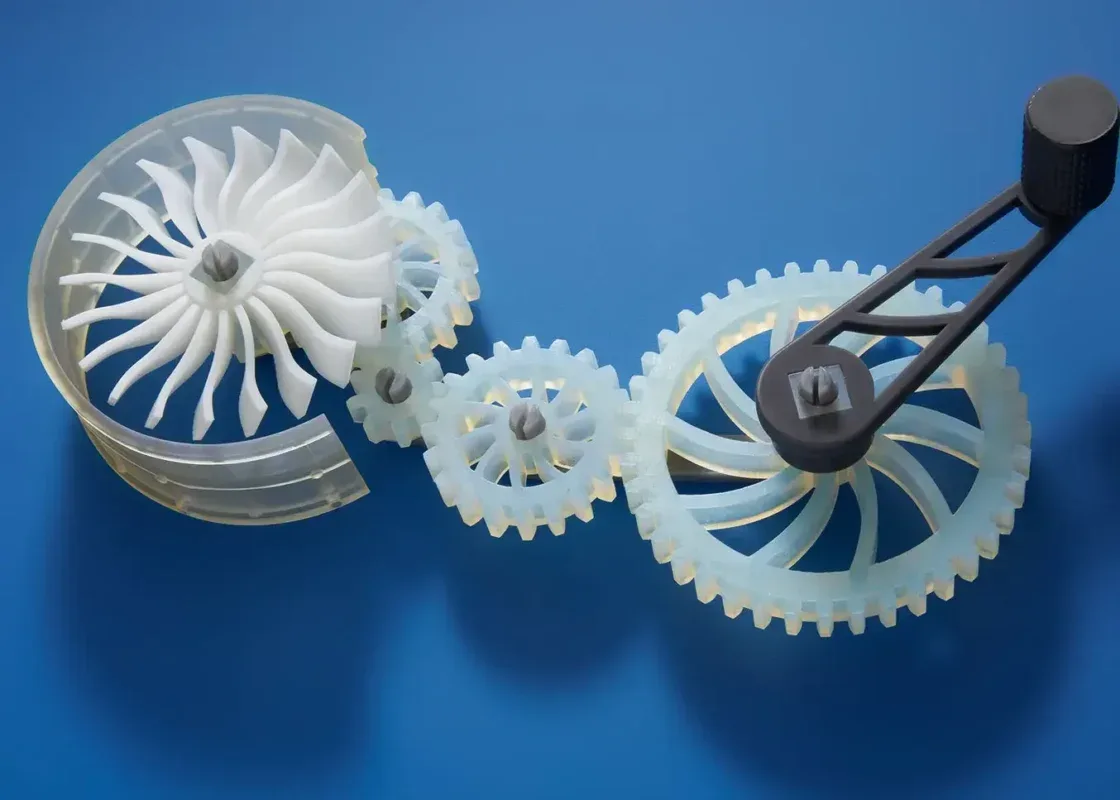
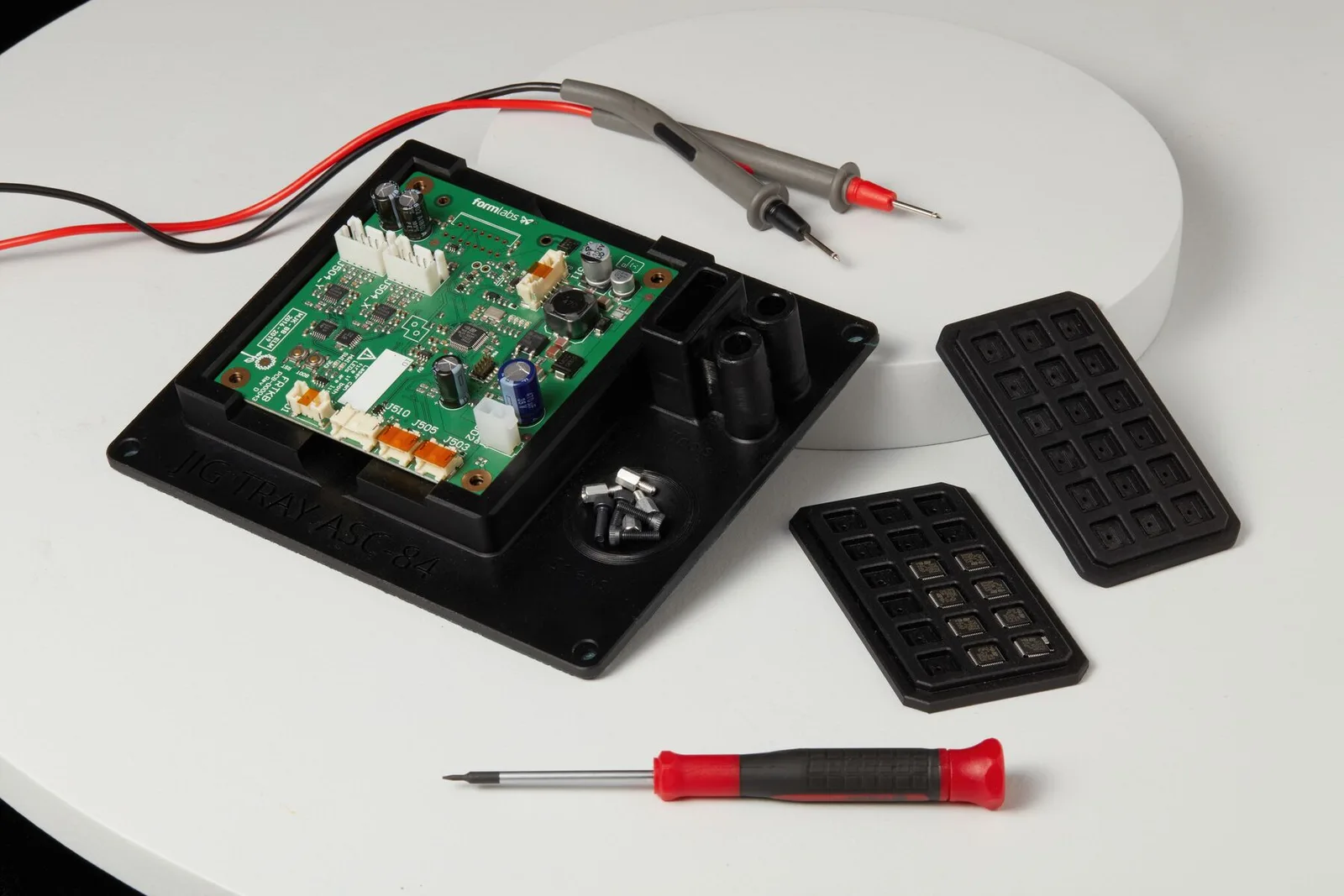
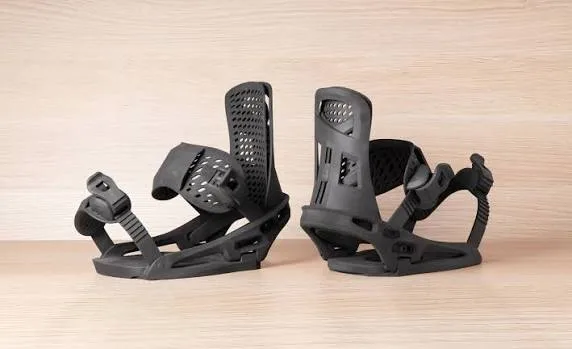
Manufactured using Selective Laser Sintering (SLS) systems like the Formlabs Fuse 1+, Nylon PA12 provides balanced, isotropic mechanical strength along all build axes. It resists environmental degradation, industrial solvents, wear, and continuous cyclic stress. Because SLS sinters a self-supporting powder bed without dedicated support structures, designers have total geometric freedom to produce complex ducting, lightweight lattices, and consolidated assemblies for end-use production.

4. Specialty & Advanced Resins
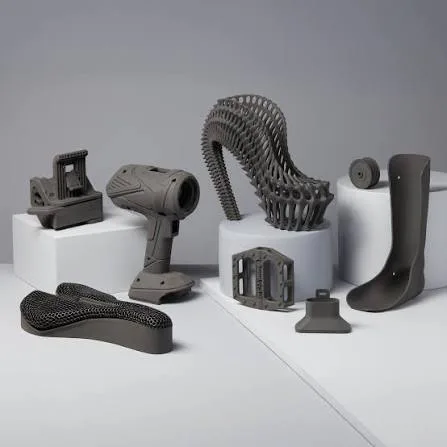
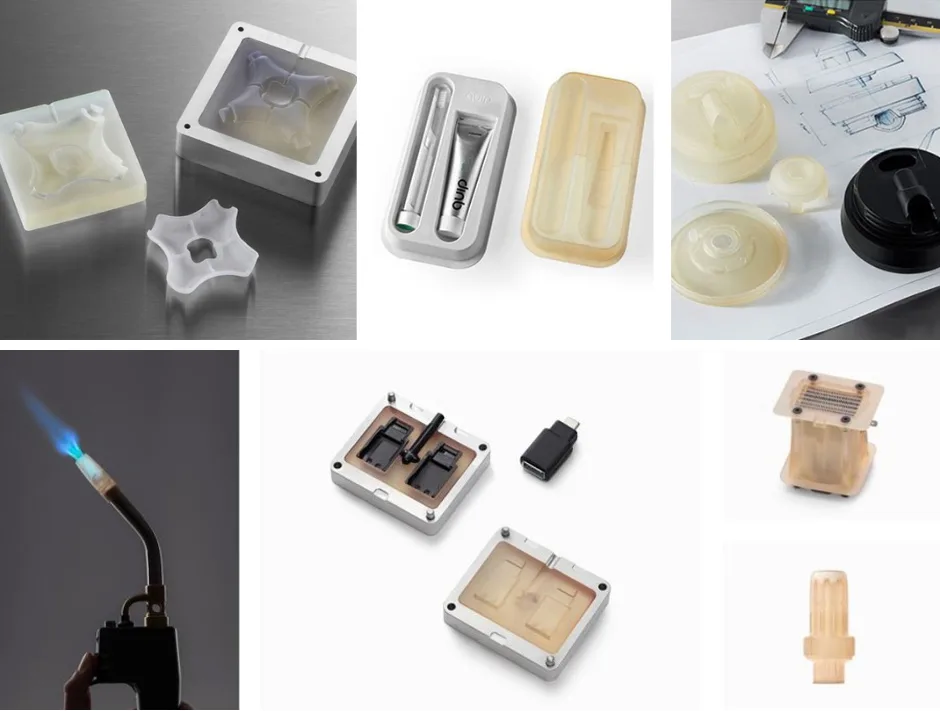
Specialized formulations cater to stringent operating conditions. These include High Temp Resins capable of sustaining extreme thermal loads in mold tooling, Flexible and Elastic Resins for tactile grips, seals, and gaskets, fiber-reinforced composites, and ESD-safe resins engineered to protect sensitive electronic manufacturing setups.
Decision Matrix: Matching Material to Application Needs
Primary Design Priority | Recommended Material | Key Engineering Advantage |
|---|---|---|
Flawless surface finish & micro-details | Standard Resin (SLA) | Crisp geometry, smooth matte or gloss finish, ideal for visual approval |
Snap-fits, cyclic bending, dynamic load | Tough / Durable Resin (SLA) | High yield elongation simulating ABS/PP behavior without brittle failure |
Functional production parts & shop-floor tools | Nylon SLS (PA12) | Isotropic durability, chemical resistance, support-free design freedom |
Flexible, compressible seals & dampeners | Flexible / Elastic Resin | Elastomeric rebound and tear resistance for custom gaskets and grips |
High heat deflection & tooling inserts | High Temp Resin / Specialty | Maintains structural rigidity under sustained high process temperatures |
Real-World Industry Applications
Selecting materials based on operational demands delivers measurable cost and lead-time reductions:
Production Jigs & Fixtures: An automotive tooling shop replacing CNC-machined aluminum nesting blocks with SLS Nylon PA12 on the Fuse 1 reduced fabrication time from two weeks to overnight, withstanding tens of thousands of pneumatic tool cycles.
Snap-Fit Mechanisms & Enclosures: Using Tough 2000 Resin allows consumer hardware teams to conduct repeated snap-fit insertion cycles, accurately validating production clearances before commissioning high-volume injection molds.
Client Presentation Models: Standard Grey and Clear resins provide injection-molded aesthetic fidelity, eliminating visible layer stepping and accelerating executive sign-offs far more effectively than on-screen CAD renderings.
High-Temperature Vulcanized Molds: Printing tooling masters in High Temp Resin enables direct rubber vulcanization at temperatures approaching 200°C without dimensional distortion, shrinking prototype mold turnaround from weeks to hours.
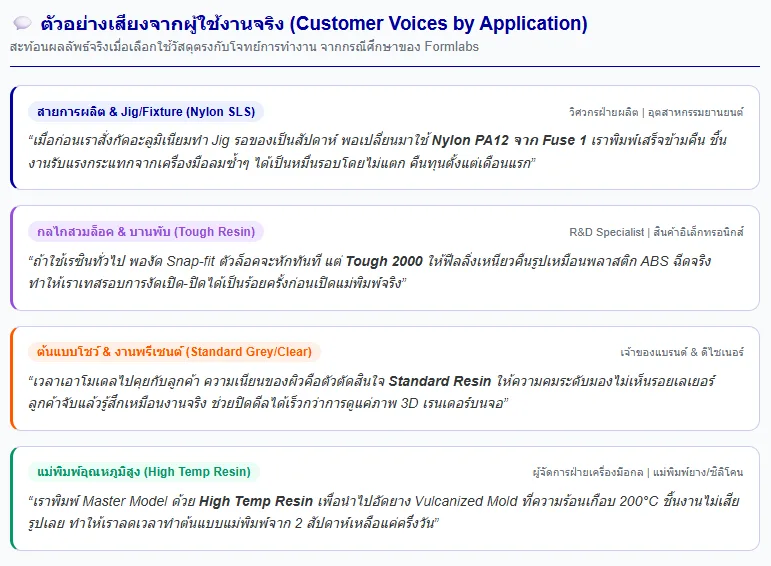
Industrial case studies validating 3D printing material selection against real-world engineering constraints.
Get Expert Guidance from 3DQuickPart
Optimal material selection is tailored to your geometry, load profiles, and operating environment. The engineering team at 3DQuickPart by AppliCAD provides dedicated technical guidance to ensure your printed parts achieve their intended functional performance.
You can upload your 3D CAD files for instant quoting and material configuration at 3dquickpart.com/estimate, or contact AppliCAD headquarters directly at 0 2744 9045 or 095-365-6871, or visit our facilities at the AppliCAD Innovation Center (AIC).