Hollowing 3D Models: How to Cut Printing Cost and Weight
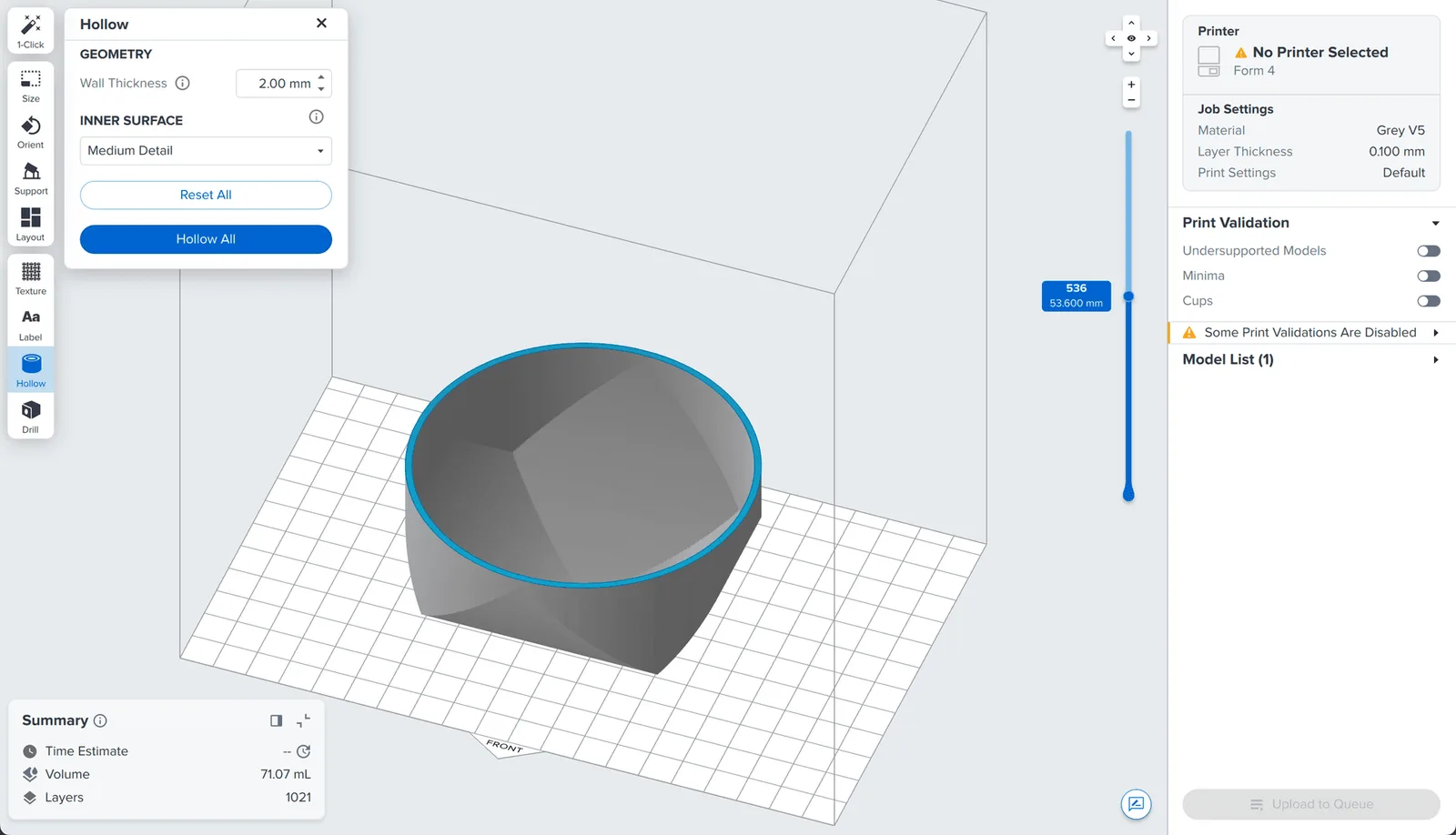
Hollowing 3D models—converting solid geometry into a defined shell—is one of the most effective Design for Additive Manufacturing (DfAM) strategies to minimize production costs. By eliminating unnecessary internal material, both material consumption and machine print time decrease significantly with minimal impact on structural integrity. However, successful hollowing requires proper engineering guidelines regarding wall thickness and drain hole placement, especially in resin SLA and powder-bed SLS processes.
The Problem with Unnecessary Solid Prints
In 3D printing, part cost correlates directly with material volume and machine run time. Fully solid prints are frequently over-engineered and needlessly expensive, especially when the application only demands an exterior aesthetic surface or moderate handling strength. For visual prototypes, scale models, and equipment housings, designing a hollow geometry with a resilient shell delivers the necessary performance at a fraction of the cost.
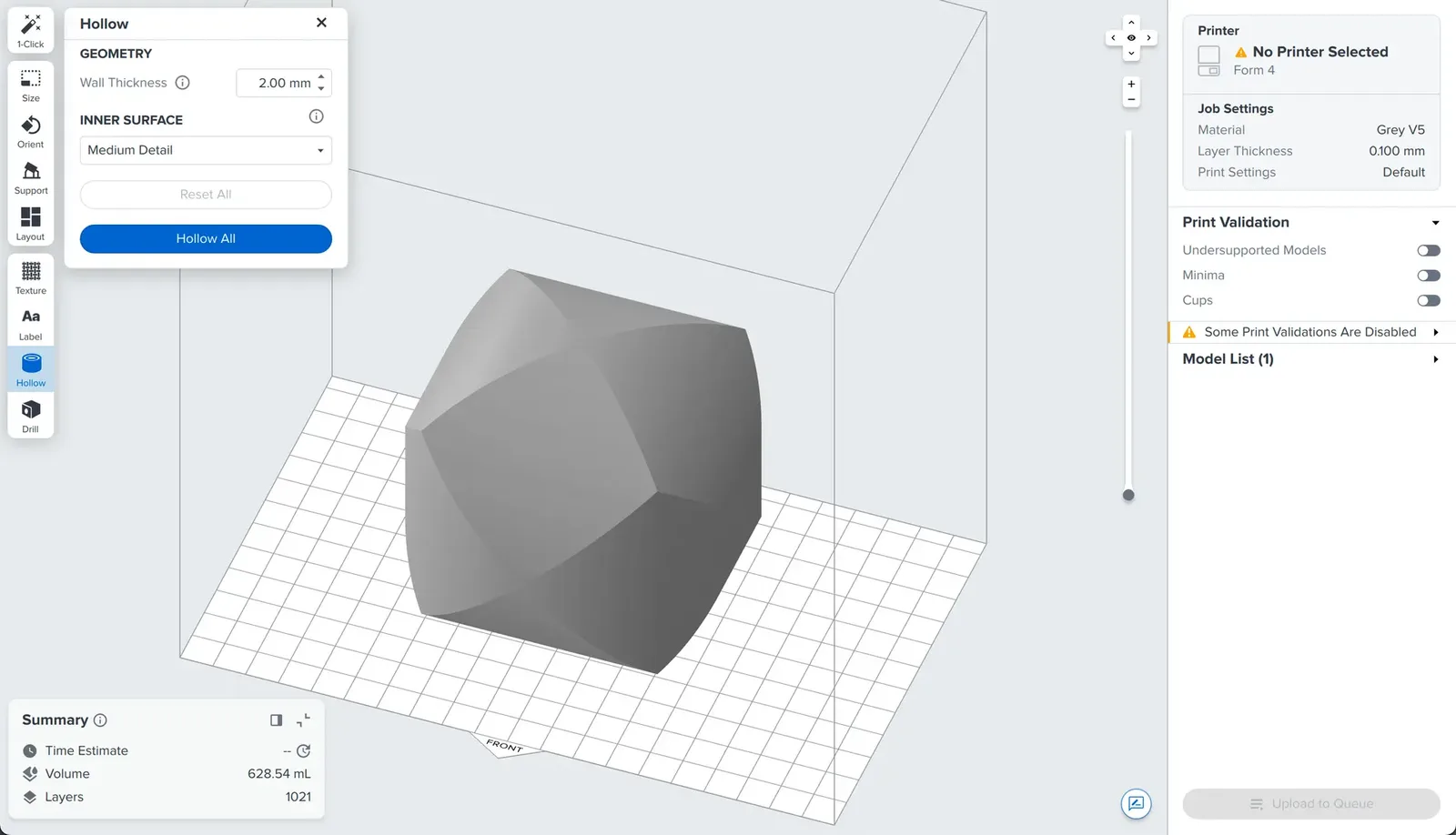

Cross-section comparison between a fully solid 3D print and a hollowed part with defined shell thickness
Common Pitfalls of Improper Hollowing
Hollowing geometry without considering 3D printing physics often creates secondary defects that compromise part quality:
Trapped Liquid Resin (Cupping): In SLA printing, an unvented internal cavity acts as a suction cup during layer peel cycles, leading to delamination, dimensional distortion, or resin trapped inside that eventually cracks the shell.
Walls Too Thin: Inadequate shell thickness causes prints to buckle under mechanical stress, deform during post-curing, or crack during handling.
Trapped Powder in SLS: Completely enclosed hollow volumes trap unsintered nylon powder inside permanently, adding unnecessary weight and wasting recoverable raw material.
Misplaced Drain Holes: A single hole or vents positioned away from the lowest point during printing will leave liquid resin or unsintered powder trapped in internal dead zones.
Part Cost Reduction in Additive Manufacturing
As 3D printing expands from rapid prototyping to end-use batch production, managing cost per part becomes vital. Hollowing provides an immediate reduction in photopolymer resin or nylon powder costs, while accelerating layer build speeds. For medium-to-large components that do not bear heavy mechanical loads, mastering hollowing techniques is a must-have competency for engineering and design teams.
4 Core Rules for Proper Model Hollowing
To ensure parts remain lightweight, affordable, and mechanically sound, follow these essential design practices:
1) Define Adequate Shell Thickness — Ensure wall thickness provides sufficient rigidity. A general recommendation for prototypes is 2–3 mm, which can be adjusted depending on overall part dimensions and mechanical load demands.
2) Place at Least Two Drain Holes for SLA — Liquid resin printing requires at least two drainage holes: one for resin drainage and a second air vent to break internal vacuum pressure. Position drain holes at the lowest point relative to print orientation.
3) Prevent Enclosed Cavities in SLS — Selective laser sintering builds require escape holes so that unsintered powder trapped inside internal chambers can be blown clean during post-processing.
4) Integrate Internal Ribs or Infill When Needed — If elevated load-bearing capability is needed, reinforce interior cavities with ribs or lattice structures instead of reverting to solid infill.
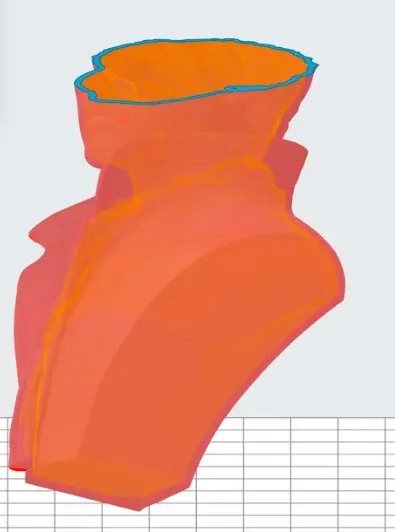
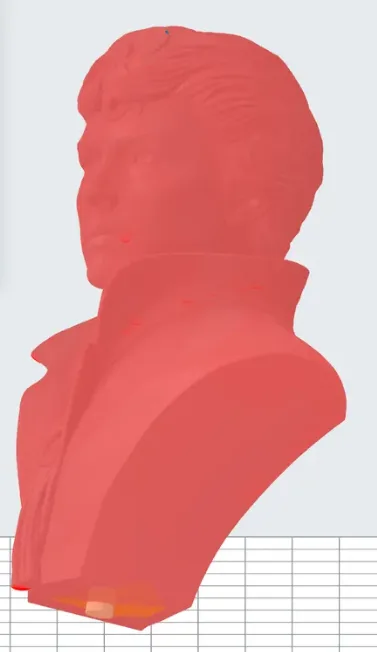
Comparison between an unvented part trapping uncured resin and a properly vented model allowing complete drainage
Comparison: Solid vs. Hollow 3D Prints
Parameter | Solid 3D Print | Hollowed 3D Print |
|---|---|---|
Material Volume | 100% full volume | Significantly reduced to shell wall only |
Print Time | Longer due to maximum displacement | Substantially faster build cycles |
Part Weight | Heavy | Lightweight and ergonomic |
Mechanical Strength | Maximum intrinsic strength | Sufficient for most applications with adequate walls |
Ideal Applications for Hollowing
Large Architectural & Display Models: Drastically reduces resin consumption while making large models easier to transport and assemble.
Visual Props & Exhibition Pieces: Parts that do not bear structural loads can conceal drain holes underneath mounting bases.
Weight-Sensitive Components: Hollow shells combined with targeted internal ribbing achieve an optimal strength-to-weight ratio.
“Simply switching from solid to hollow geometry with correct drain holes visibly reduces material overhead and lead time per part.”
Optimize Your 3D Prints with 3DQuickPart
At 3DQuickPart by AppliCAD, our engineering team helps inspect your CAD models, determine optimal wall thickness, and specify ideal drain hole positions. Whether you require SLA resin on the Formlabs Form 4L or SLS nylon on the Formlabs Fuse 1+, we ensure high precision at the lowest possible unit cost.
Upload your STL files for an instant quote at 3dquickpart.com/estimate, or contact AppliCAD technical specialists at 095-365-6871, head office 0 2744 9045, or visit the AppliCAD Innovation Center (AIC).
Summary
Hollowing 3D models is an efficient design optimization that yields immediate cost and weight savings. By maintaining proper wall thickness and placing drainage holes correctly, you can produce lightweight, economical, and fast-printing parts without compromising surface quality or functional strength.